
We may earn money or products from the companies mentioned in this post.
Guest Post by Claudia Tavani
Carnival in Italy may be most famously connected to the city of Venice, but Rome has a Carnival all of its own. Called Carnevale, this seasonal event takes place annually in the city center and has roots that date back to the medieval era – as early as the 10th century.
If you are visiting Rome between February and March, depending on the year, you may be able to enjoy the Carnival celebrations in the Italian capital.
This post will guide you throughout the history of Rome Carnival, and the best things to do in Rome at that time of year. You will also discover the best food to have in Rome during Carnival, the best places to visit to make the most of the events, and get a few additional tips.
The History of Rome Carnival
The first Carnival in Rome is often dated to 1143. Back then, these celebrations were known as Ludus Carnevalarii, and originally took place in the Testaccio area of Rome. The event was marked by a day that was full of joyful frivolity in an atmosphere of “anything goes” on the day before Ash Wednesday, which marked the start of Lent and the purifying practices that take place before Easter.
Although the Carnival is linked to the Roman Catholic Church, it is also believed to have roots in the ancient Roman festival of Saturnalia. This celebration was held in December (in the Julian calendar) and was held in honor of the Roman god Saturn. It was marked by mask-wearing, feasting and dancing. This also included ritual sacrifices to appease the gods.
This event was celebrated until late in the Imperial age of Rome in much the same way. Most interestingly, it was a day on which the social hierarchy of Rome was flipped: masters would serve their slaves, and Rome’s otherwise strict social boundaries would be broken.
Fast-forward to the 12th-century Ludus Carnevalarii. At the 1143 event, Pope Innocent II – as well as his retainers – attended the ceremonies at Testaccio. Noble families of the city took part in duels and jousting, and ordinary Roman citizens took part in the extravagant festivities. Events such as pig racing occurred in the streets, while a knights’ tournament was held in Piazza Navona.
By the mid-15th century, Rome’s Carnival was well and truly embedded in the city. It was Cardinal Pietro Barbo, who hailed from Venice (and who later became Pope Paul II), who brought Carnival as we know it today to the heart of Rome.
Cardinal Barbo was known to be a rather flamboyant character who enjoyed partying. After he moved to the center of the city to live in a palace now known as Palazzo Venezia, he set about encouraging the Carnival to take place nearby on a stretch of the ancient Via Flaminia. On 9th February, 1466, it was here that the Pope officially opened the first Renaissance-era Carnival.
This elaborate event included parades featuring depictions of mythical creatures inspired by ancient Roman traditions, and is said to have cost a large amount of money – something to the tune of 400 gold florins. It was also the Pope that established a race along the modern day Via del Corso (corso meaning “race” in Italian). Bulls, donkeys, children and the elderly were among the participants in these mocking races, which were held on each of the eight non-holy days of the Carnival period.
However, the crowning glory was the Berber horse race. These prized horses from North Africa were bred for the express reason of racing – however, minus the riders. They would be goaded into running and then released from Piazza del Popolo, where they would gallop along the Corso to Piazza Venezia. The finish line was marked by carpets in the streets, and the owner of the winning horse was awarded with an elaborately embroidered banner (the cost of which was paid, forcibly, by Rome’s Jewish community).
Needless to say, the Berber race was a raucous affair. Prime vantage points to watch the race were staked out very early on, but this didn’t stop people packing the streets to catch a glimpse of the high-octane race. It was an event even in the days leading up to the race itself. The nobility of Rome would go out into the streets in their opulent carriages and, in a role reversal similar to that of the ancient festival of Saturnalia, the aristocrats would throw flowers and sweets like sugared almonds to the amassing crowds.

By the 18th century, Carnival culminated at the sunset of Shrove Tuesday with a procession of lights: the Festa dei Moccoletti. People wore masks, carried candles, and shouted “Mor’ammazzato chi nun porta er moccolo” (“Death to anyone who isn’t carrying a candle!”). This was seen almost as a funeral ceremony to mark the end of Carnival, but the proceedings were frenzied and, in some cases, bloody. Hidden behind their masks, people in the crowd took it upon themselves to hurl insults at each other and settle personal scores, sometimes violently.
Masks became a prominent aspect of the Carnival. These added to the aspect of freedom and frivolity of the festivities. It hid people’s identity, so that everybody – from peasants and beggars to wealthy merchants and the aristocracy – could mix and mingle in the same crowd.
The Roman Carnival has developed into what it is today over the centuries. With its parades and processions, music and entertainment, it has influenced the very culture of the city. Over the years, it has attracted notable participants such as Raphael, Brumante, and Michelangelo, but also people flocked from elsewhere to enjoy the event.
These include writers such as Charles Dickens and Johann Wolfgang von Goethe; the latter visited the 1788 Carnival and said: “almost everything, everything fisticuffs and stabbing, is permissible.”
Almost a century after Goethe’s visit to the Carnival, King Vittorio Emanuele II – the first king of a unified Italy in over a thousand years – abolished the Berber race following the death of a spectator. Eventually this led to the Carnival as a whole fading from the festive calendar and disappearing into relative obscurity.
Today, however – possibly because of the success of the Venetian Carnival’s revival in 1979 – Rome’s own Carnival also rose from the ashes. Though it may not be the chaotic spectacle it once was, it’s still a fun time to be in the city, with dressing up, mask-wearing and street performances part and parcel of the festivities. Oh, and don’t forget the delicious food available this time of year either!
Dates of Rome’s Carnival
Rather than taking place over one day, Rome’s Carnival is more of a period of festivities in the lead-up to Martedi Grasso. Much like its medieval predecessor, this is an eight-day series of festive events that finish the day before the Lent period begins.
The dates of the celebrations change depending on the dates for Easter but usually take place sometime between 3rd February and 9th March. The main parade takes place on the Saturday before Martedi Grasso, and begins around Piazza del Popolo, following through Piazza di Spagna and Piazza Navona.
For many, Carnevale is more of a children’s festival nowadays, with schools celebrating the run-up to Lent, with costumes and classroom parties.

Visiting Rome During the Carnival
The Carnival season in Rome is a fun time of year to visit. There are colorful events and parties taking place in different neighborhoods of the city. Although the event attracts crowds, it isn’t exactly heaving with visitors and locals. This means that you can still travel around the city fairly easily without having to worry.
Basically, it won’t affect your trip too much. Public transport and traffic are much as usual, except maybe on Martedi Grasso itself. There won’t be any closures of main attractions, either, as Carnival days aren’t public holidays.
However, it is still a good idea to plan in advance and book your accommodation well before you plan to travel. That’s because, as well as people from abroad, it’s likely that more Italians than usual will be in Rome, enjoying the delicious food and festivities.
Don’t expect enormous parades and big balls with people wearing masks, Venice-style. Instead, this is more of a low-key event. And, actually, in some ways, Carnival is more geared towards enjoying some delicious food, and some family time together.
Best Places to See Carnival in Rome
The best places to see events relating to Carnival occurring aren’t that numerous, but there are a few hotspots that you should check out on your trip to Rome.
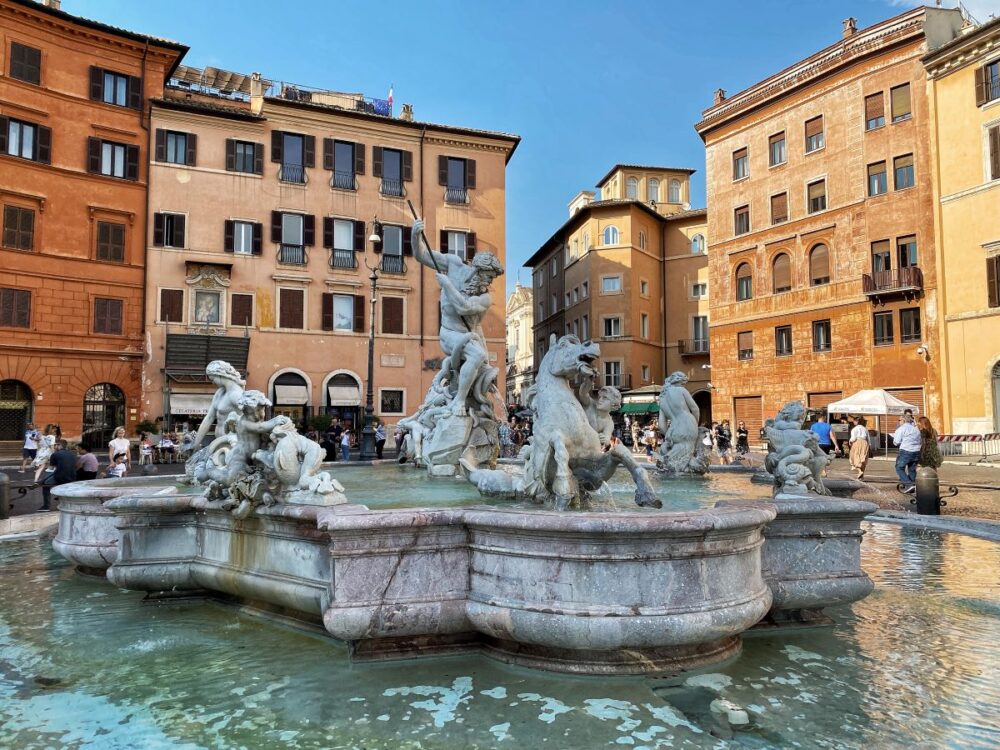
The main celebration, called Carnevale di Roma, takes place at Piazza Navona on Martedi Grasso. This official celebration sees all sorts of performers entertaining the crowds, with jugglers, clowns and interesting characters riding on colorful floats through and around the square.
Piazza Navona is, after all, the historic heart of Rome’s Carnival celebrations. It’s here that the Berber horse races finished, and where the knights’ tournament was held in the medieval era, so therefore it’s part of the draw to this part of the city. It is like the spiritual home for the city’s Carnival festivities.
The horse-drawn parade along Via del Corso is also another major attraction. Taking place in the late afternoon, this parade sees a hundred horse-drawn carriages with riders and participants dressed in period costume. The route is the same as the Berber horse race.
One perk for those with families is that young children can ride for free on horses and enjoy the colorful entertainment. The Carnival ends with a bombastic fireworks display at Piazza del Popolo – a bit different to the candle-lit procession of the Renaissance era!
Another highlight takes place in the area around Castel Sant’Angelo. This hosts an artificial ice rink during the Carnival period, which is open till late in the evening. The ancient fortress also plays host to festive musical performances.
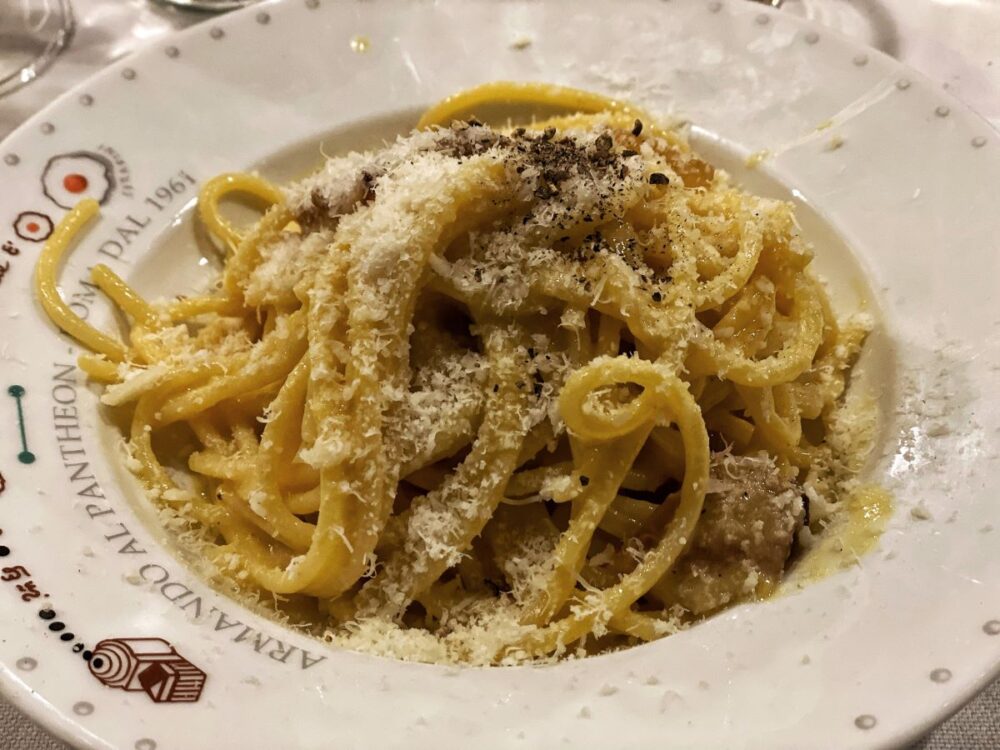
What to Eat at Rome’s Carnival
Rome is well known for its delicious food, no matter what time of year it is, but during the Carnival season there are a number of delectable delights to enjoy. The traditions of Carnival in Rome related to Saturnalia, the pagan feast, and so indulging in feasts at this time of year has long been a practice that Romans are no stranger to.
Saturnalia was marked by an abundance of food, with nuts and dates, and other sweet treats, being distributed in the streets. Today this ancient tradition lives on, with an array of delicious Carnival food to enjoy at this time of year.
Since this is the time of year before Lent, when people would traditionally fast and abstain from eating meat, there are many indulgent dishes to sample while in the city.
One sweet treat you must try is castagnole alla romana. These balls of dough are deep fried and then dusted with sugar, like mini doughnuts, and are mouthwateringly good (obviously!). Another deep-fried delight is frappe – thin strips of dough, fried and covered in icing sugar. They’re light and crunchy, and a must-try in the carnival season.
More sweets arrive in the form of shortcrust pastry called bocconotti. Known by their full name bocconotti di ricotta alla romana, this Carnival-specific dessert is simple: the pastries are topped with ricotta and seasoned with cinnamon. There’s also the beigne, sort of like an Italian version of the French beignet. This is a light puff pastry filled with choux cream, and they are insanely moreish!
More unusual is tortelli dolci. This is basically sweet ricotta ravioli, sometimes filled with chocolate cream. A delight for the senses. And though the fritole veneziane is a Carnival dish hailing from Venice, you can still get it during this season in Rome. It’s more in the way of classic fried dough, this time filled with raisins and pine nuts. Amazingly, the dish was first mentioned in the 14th century.
Something you could also try during the Carnival period are cannoli. Though they’re from Sicily, and while they may be more in line with ancient celebrations of Carnival, these hollow cylinders of fried dough are packed with a sweet ricotta filling and are nevertheless a must-try item.
To try frappe (and other Carnival sweets besides) there are a few bakeries you should head to, depending on where you are in the city – or if you want to embark on an odyssey of sweet-sampling across Rome. For one thing, there’s the family-run Biscottifico Innocenti in Trastevere, while in Largo di Torre Argentina there’s Roscioli Forno (founded in 1972). Termini has a good option, too: try Panella, which stocks a whole lot of bakery goods from across the country.
PRO TIP: On the day following Martedi Grasso, specialty items like frappe and castagnole will disappear from Rome’s bakeries. So if you want to sample them, don’t leave it too late!
Tips for Enjoying the Carnival in Rome

Get a bird’s eye view
If you don’t feel like being with all the crowds, and you want a good view of the fireworks at Piazza Navona, it’s possible to get an amazing view of the fireworks from up high. Specifically, you should head to Trastevere. When you see the statue of Garibaldi riding a horse, walk up the slope. You will eventually get to the Terrazza del Gianicolo, which affords one of the best views of the city: the Belvedere (Viewpoint) di Gianicolo. Take a seat and enjoy.
Head out on a day trip
Elsewhere, if you have longer in the city than just a few days, then you might want to escape Rome to see how Carnival is celebrated in the area surrounding the Italian capital. One place that does Carnival very well is Ronciglione.
This tiny town of around 8,000 inhabitants in the historic Tuscia region (corresponding to the present-day province of Viterbo) puts on a colorful Carnival indeed, and keeps traditions alive that are no longer observed in Rome.
For one thing, there’s the Berber horse racing. Much like the races that took place in Rome centuries ago, these are riderless horse races sponsored by the nine districts of Ronciglione, all separated by different flags and colors, who compete to win the Palio della Manna.
The Berber race kicks off with the spectacle that is the Charge of the Hussars, when riders roar across Montecavallo – all decked out in 19th-century period costume, evoking a period of French domination in the region. The event is repeated across multiple Sundays ahead of Martedi Grasso; ticket prices are 5 Euros per person.
Carnival in Ronciglione is something that has taken place for the past 130 years, and is directly inspired by Rome’s Renaissance era Carnival. So, of course, it also includes mask-wearing and frivolity, much like in the heyday of Rome’s own Carnival period. On Martedi Grasso itself, the “Carnival King” enters the town in a colorful, noisy procession: think music, masks and confetti. This even includes a gathering of red-nosed masks, who sing (with some irony) about drinking wine and feasting.
To join in the fun, you’ll have to make your way to Ronciglione, which luckily is only around an hour from Rome. To arrive there by public transport, you can take the train from Roma Tiburtina to Capranica Sutri, then take a bus to Ronciglione. Alternatively, you can take the train to Viterbo and then take a bus instead.
If you’re driving, then take the A1, exiting at Magliano Sabina exit; follow the signs to Civita Castellana, Nepi and finally to Ronciglione

Things to Do in Rome During the Carnival Weekend
One of the best things about being in Rome during the Carnival period isn’t necessarily the festivities themselves: it’s the “Cultural Carnival” instead. On Martedi Grasso, Rome’s municipal museums will be free of charge to enter, so it’s a great day to visit some of the big hitters, including the Capitoline Museums. Temporary exhibitions at some museums will also be included in the free entry, but note that not all venues will be taking part.
Another family-friendly place to head in the city is the Parco della Musica Auditorium for the Carnevale Tarantella. A self-admitted “party for everyone”, attendees wear masks and performers wear period costumes, filling the auditorium with music and dance. The event culminates in the Sinopoli Hall, where dancers, singers and musicians from all over Italy.
The Carnevale Tarantella claims to be a way to preserve ancient agricultural rituals that mark the passing from winter to spring – a fun way to learn about tradition and festivities in times gone by.
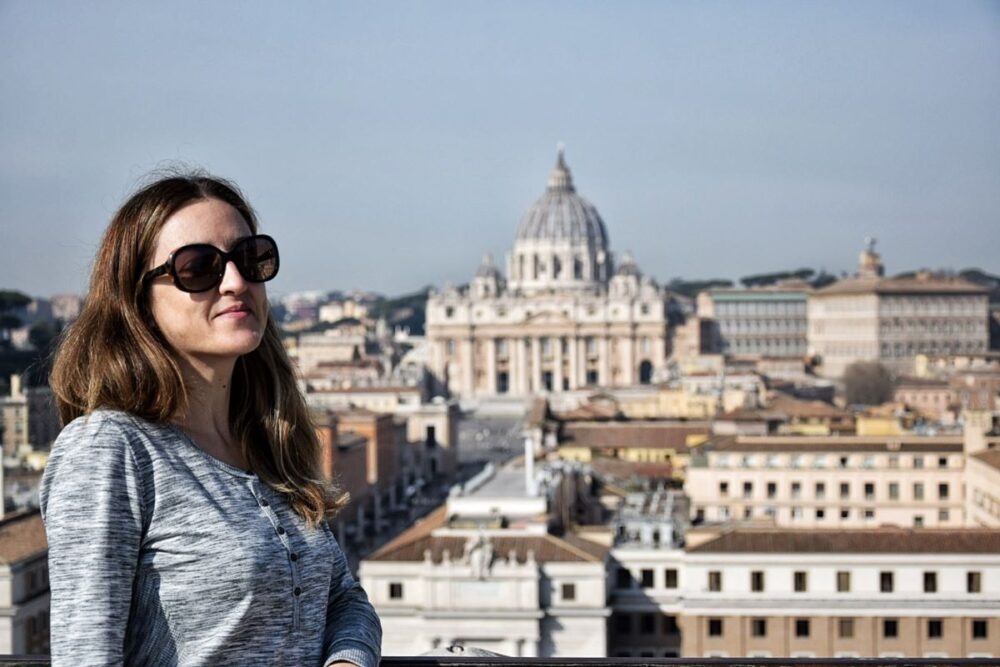
What to Pack for the Carnival in Rome
The Carnival in Rome doesn’t have any particular dress code. You won’t need to bring along any special clothing, and you won’t feel out of place if you’re not dressed up in ornate Carnival clothing (unlike at Venice’s high-pomp Carnival). Although you could always bring along a colorful mask – something that’s perhaps more appropriate, and fun, if you are traveling with younger children.
In terms of what to pack, you should note that the Carnival always takes place between February and March. At this time of year in Rome, the weather is changeable. While it can be fairly mild in the daytime, the temperatures can still be quite low, and nights can still feel a bit wintry to say the least.
Because of this, I recommend packing layers. This is good so you don’t overheat while wearing one big coat or jumper, and you’ll be able to strip off layers if it’s warm and put them back on again as evenings get chilly. I’d also recommend an umbrella or waterproof raincoat (just in case!). And as always, comfortable shoes for walking – especially since you’ll be spending a long time on your feet – are a must.
Since you’ll be spending time exploring, it’s a good idea to bring a refillable water bottle with you. This way you can save on plastic pollution while also saving money on having to buy countless bottles of water. There are plenty of nasoni drinking fountains spread around the city.
Author Bio:
Claudia Tavani is the mastermind behind My Adventures Across The World, where she shares her tips on a variety of international destinations. Based in Sardinia, Rome is her home away from home and she writes about it extensively on her blog.
Check out these additional Italian posts:


 Raised as a third culture kid living in South America and Europe, Annick caught the travel bug early. As an empty-nester, Annick enjoys sharing her tips for traveling for those with champagne taste and beer budgets.